
Spark vs. Invisalign: Which Clear Aligner Is Right for You?
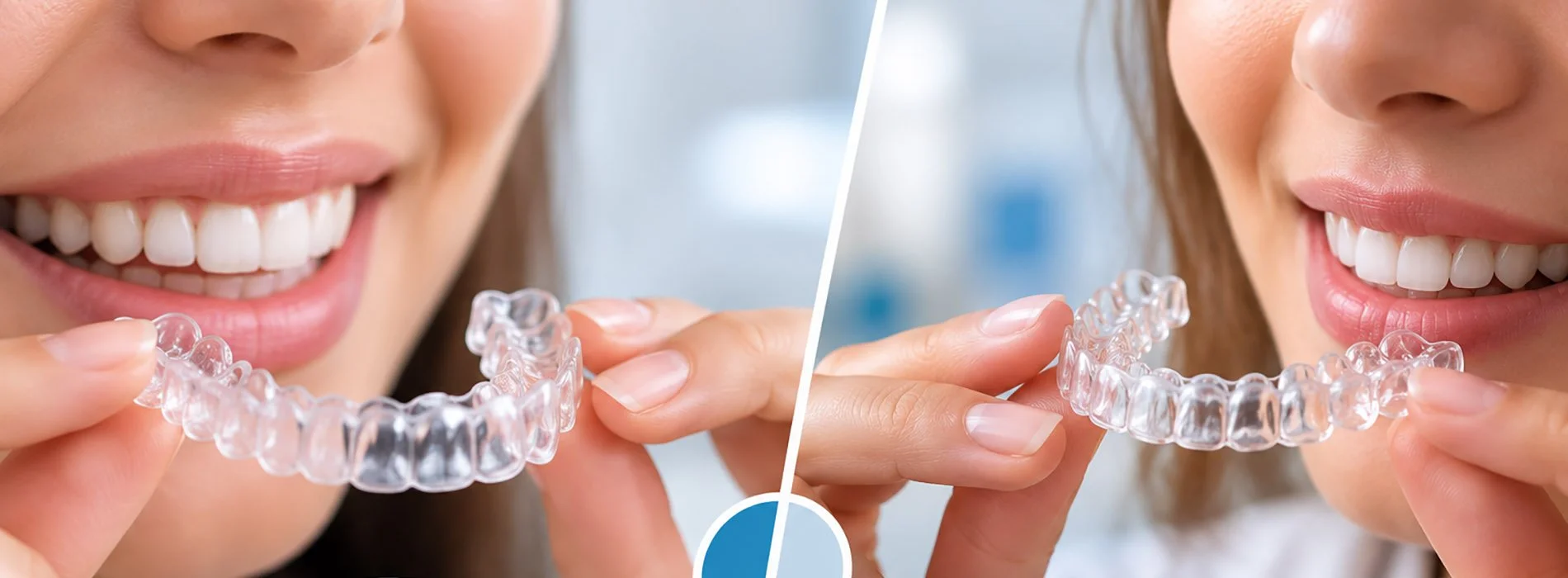
Spark Aligners and Invisalign both use removable, custom-made trays to straighten teeth gradually. The right choice depends on your case, treatment goals, orthodontist’s plan, and daily wear habits.
Choosing between two clear aligner brands can be difficult when both promise clear, discreet treatment.
Understanding their similarities, differences, treatment options, and cost factors can make your consultation more useful.
This guide explains the key differences between Spark and Invisalign, including materials, appearance, treatment planning, case complexity, treatment time, and cost.
Spark Aligners vs. Invisalign: What Is the Difference?
The main difference between Spark and Invisalign is their aligner material, treatment-planning technology, product options, and approach to individual cases.
Both systems use a series of clear trays to apply controlled forces that move teeth toward planned positions.
Your orthodontist creates a treatment plan that determines how the aligner system will address your specific tooth movements.
Spark uses proprietary TruGEN™ and TruGEN XR™ materials. Invisalign uses SmartTrack™ material, which was developed specifically for the Invisalign system.
The brand alone does not determine your result. Your diagnosis, treatment plan, orthodontic monitoring, and ability to wear your aligners consistently all matter.
Spark Aligners vs. Invisalign: Side-by-Side Comparison
The similarities between Spark and Invisalign can make the choice seem difficult. Looking at the features that affect your treatment experience provides a clearer comparison of similarities and differences.
| Feature | Spark Aligners | Invisalign |
|---|---|---|
| Material | TruGEN™ and TruGEN XR™ | SmartTrack™ |
| Removable | Yes | Yes |
| Nearly invisible | Yes | Yes |
| Digital treatment planning | Spark Approver™ | ClinCheck® |
| Custom-made trays | Yes | Yes |
| Attachments | Available | Available |
| Refinements | Depends on Spark product and plan | Depends on treatment plan |
| Daily wear | Follow your orthodontist’s instructions | Typically 20–22 hours |
| Suitable for teens | Certain Spark options are available | Invisalign offers teen and growing-patient options |
| Treatment time | Depends on case complexity | Depends on case complexity |
Spark vs. Invisalign: A Brief History
Invisalign received FDA clearance in 1998, while its first commercial sales to North American orthodontists began in 1999. Spark entered the market later as a newer clear aligner system.
Spark was introduced and piloted in Australia and New Zealand in 2017 before its U.S. commercial release in 2019.
That history explains why Invisalign has a longer track record in the clear aligner market. However, Spark's newer entry doesn't determine whether it is right for your orthodontic needs.
The more useful comparison is how each system handles your specific treatment goals.
Spark and Invisalign: What Do They Have in Common?
Spark and Invisalign use removable, custom-made clear aligners that gradually move teeth according to a planned sequence.
Both systems can provide a discreet alternative to metal braces for appropriate patients. Your orthodontist uses digital records, treatment planning, and a series of trays to guide tooth movement.
Common features include:
Clear, removable aligners
Customized treatment planning
Digital scans for treatment planning
Sequential trays for gradual tooth movement
Orthodontic monitoring during treatment
Potential attachments and refinements
Because aligners are removable, you can take them out for meals and oral hygiene. However, consistent wear is essential for the treatment to progress as planned.
Spark vs. Invisalign: Which One Is More Invisible?
Both systems are designed to look clear and discreet during orthodontic treatment.
Spark states that its TruGEN™ material provides high clarity and that Spark Aligners are nearly invisible. The company also reports less staining compared with its leading aligner-brand comparison.
Invisalign describes its aligners as virtually invisible and uses SmartTrack™ material for its clear aligner system.
Spark's stain resistance claims come from manufacturer testing, so they should be understood in that context. Your cleaning routine and what you consume can also affect how your aligners look.
Which Aligner Is More Stain-Resistant?
Spark's manufacturer reports that TruGEN™ material stains less than the leading aligner material used for comparison.
This may matter if keeping your trays clear is a major concern. You should still remove your aligners before eating and follow your orthodontist's cleaning instructions.
How Do Spark and Invisalign Work?
Spark and Invisalign work by using a set of aligners to apply planned forces that gradually move your teeth.
After a digital scan, your orthodontist develops a treatment plan that maps the desired tooth movements. Your aligners are then manufactured to follow that planned sequence.
You typically wear your aligners for most of the day and change to a new tray according to your orthodontist's instructions. Invisalign recommends 20 to 22 hours of daily wear, while Spark wear schedules can vary by product and treatment plan.
Remove aligners to eat and drink anything other than water. Also remove them to brush and floss before replacing them.
Following these instructions matters because a sophisticated treatment plan cannot compensate for inconsistent aligner wear.
Can Spark Clear Aligners Treat the Same Problems as Invisalign?
Both Spark and Invisalign can treat many common orthodontic problems, but suitability depends on your specific case.
Clear aligner treatment may address problems such as:
Crowded teeth
Spacing and gaps
Overbite
Underbite
Crossbite
Open bite
Certain complex tooth movements
Spark lists crowding, spacing, open bite, underbite, overbite, and crossbite among the conditions its system can treat. Invisalign also describes treatment options for cases ranging from simple to complex.
This does not mean every patient can choose either system. Some cases may require traditional braces, additional appliances, or another orthodontic approach.
Can Clear Aligners Handle Complex Cases?
Yes, clear aligners can treat many complex orthodontic cases when the treatment is properly planned and monitored.
Spark offers treatment options intended for different levels of case complexity, including its advanced option for complex malocclusions. Invisalign also offers tools for complex movements, including attachments and other treatment features.
The key question isn't whether Spark or Invisalign can treat a certain condition. Instead, ask whether the chosen system can produce the movements your particular teeth and bite require.
Why Your Treatment Plan Matters More Than the Brand
Your treatment plan matters because the same aligner brand can produce different treatment approaches for different patients.
Your orthodontist evaluates your bite, tooth positions, available space, and required movements before deciding how to sequence treatment. Attachments, elastics, interproximal reduction, or refinements may also be included when clinically appropriate.
A digital scan shows your current tooth positions. It does not replace the orthodontist's diagnosis or clinical judgment.
This is why choosing Spark or Invisalign based only on appearance, advertising, or treatment cost can overlook important clinical factors.
Spark vs. Invisalign: Treatment Time and Refinements
Spark treatment commonly takes about 10 to 20 months, while Invisalign averages about 12 to 18 months.
Spark states that many patients can be treated within 10 to 20 months, although treatment duration varies with case severity.
Invisalign currently reports an average treatment time of 12 to 18 months, with some mild cases taking as little as six months.
Invisalign states that treatment duration depends on case complexity and daily compliance, while Spark provides different products with varying numbers of stages and refinement options.
Refinements are additional aligners used when further tooth movement is needed. They can help address teeth that do not track exactly as planned or movements that require additional finishing.
Spark's Clear Aligner options differ in the number of stages and refinements included. Therefore, comparing the number of Invisalign trays or Spark trays alone may not tell you what your entire treatment involves.
How Much Do Spark Aligners Cost Compared With Invisalign?
Clear aligner treatment commonly costs several thousand dollars, while treatment often takes about 10 to 20 months depending on case complexity.
Spark's published cost information gives a broader $3,500 to $8,000 range for doctor-prescribed and managed clear aligner treatment. There is no single national cost of Spark Aligners or Invisalign treatment.
For Invisalign, the company does not publish one fixed nationwide treatment price because fees vary by provider and case.
Invisalign states that its treatment cost depends on case complexity and the number of aligners needed.
Important cost factors can include:
Case complexity
Number of aligners
Treatment duration
Attachments or additional orthodontic procedures
Refinements
Retainers
Follow-up appointments
When comparing Spark and Invisalign treatment cost, ask whether the quoted price includes refinements, retainers, scans, and follow-up care. A lower initial price may not represent the same overall treatment package.
How Should You Choose Between Spark and Invisalign?
To choose between Spark and Invisalign, compare how each system fits your specific orthodontic needs rather than choosing by brand alone.
During your consultation, ask your orthodontist:
Which aligner system fits my case?
What tooth movements are required?
Will I need attachments or other orthodontic features?
How many aligners might I need?
Could refinements be necessary?
What treatment length should I expect?
What does the total treatment cost include?
For some patients, Spark's material characteristics may be especially appealing. Others may value Invisalign's longer market history or specific treatment features.
The useful question is not simply “Spark vs. Invisalign, which is better?” It is “Which system and treatment plan fit my orthodontic needs?”
Find the Right Clear Aligner Treatment in Charleston
Vincent & Bullwinkel Orthodontics provides personalized orthodontic care in Charleston, helping patients choose the clear aligner treatment that fits their smile and treatment goals.
Ready to explore Spark Clear Aligners or Invisalign? We offer Spark clear aligner treatment and can schedule a consultation to discuss your treatment options.
Frequently Asked Questions
How much do Spark Aligners cost compared to Invisalign?
The treatment cost varies by case complexity, treatment length, provider, and included services. Ask for a complete treatment quote during your consultation.
Are Spark Aligners as effective as Invisalign for tooth movement?
Both systems move teeth through planned orthodontic forces. Effectiveness depends on your case, treatment plan, monitoring, and consistent wear.
Which aligner system is more stain-resistant?
Spark states that its TruGEN™ material stains less than the leading aligner material used for comparison.
Can teenagers use Spark Aligners or Invisalign?
Yes, both systems have treatment options for younger patients. Your orthodontist can determine which option suits the patient's development and orthodontic needs.
What are the main differences between Spark and Invisalign?
The main differences include aligner materials, digital planning technology, product options, refinement structures, and the treatment approach selected for your case.