
EARLY INTERCEPTIVE TREATMENT
Early Interceptive Orthodontic Treatment for Children in Charleston, SC.
Early interceptive orthodontics isn't about starting early for its own sake. It's about acting during the window when certain things can be fixed before it closes.
5.0 Stars · Nearly 400 Google Reviews
Board-Certified Orthodontist
Serving Charleston Since 1984
Best of Charleston · 6 Consecutive Years
What Is Early Interceptive Orthodontic Treatment?
Early interceptive orthodontic treatment is an initial phase of orthodontic care used to address certain orthodontic problems while a child's jaws and facial structures are still developing.
Unlike comprehensive orthodontic treatment, which typically focuses on aligning the permanent teeth, early treatment may focus on the underlying development of the jaws, bite, available space, or oral habits.
Not every child needs early treatment. Some children benefit from treatment, while others simply need periodic monitoring until they are older.
The goal is not to start orthodontic treatment as early as possible. The goal is to treat at the right time when intervention can provide a meaningful benefit.
WHY TIMING MATTERS
When Should a Child See an Orthodontist?
The American Association of Orthodontists recommends that children have their first orthodontic evaluation by age seven. This does not mean every seven-year-old needs braces or orthodontic treatment.
An early evaluation allows an orthodontist to identify developing concerns while your child's teeth and jaws are still changing. In some situations, children may benefit from an evaluation even earlier when specific dental, jaw, breathing, or oral-development concerns are present.
Early evaluation can answer an important question for parents: Does my child need treatment now, or is it better to wait and monitor their development?
WHAT WE LOOK FOR
Conditions We Most Commonly Address
Early orthodontic evaluations can help identify developing problems with your child's teeth, jaw growth, and oral habits. Conditions we commonly evaluate include:
Crossbites
Narrow Palate Development
Crowding Related to Jaw Size
Prolonged Thumb or Finger Habits
Underbites & Skeletal Discrepancies
Mouth Breathing
Airway-Related Jaw Development
Excessive Overjet
The right next step depends on your child's specific oral growth pattern. Sometimes monitoring is all that's needed; other times, early treatment can help address a developing concern.
THE QUESTION EVERY PARENT ASKS
Does My Child Really Need Early Interceptive Treatment? Or Can We Just Wait?
It's the right question, and we're glad when parents ask it directly. The honest answer depends entirely on what we find.
For many kids, the answer is no, not yet, or not at all. We'll tell you that clearly and put them on an observation schedule, so we're watching the right things at the right intervals.
For some kids, the answer is yes, and here's why it matters now. When the clinical picture shows a developing crossbite, a narrow jaw affecting the airway, or a skeletal pattern that will only become more entrenched with time, acting during the growth window produces outcomes that simply aren't possible later.
The facial sutures that allow us to influence jaw width and position are active during a specific developmental period. Once they fuse, our options change significantly.
What we never do is recommend early treatment because it's convenient for a treatment plan. We do it when the timing is clinically meaningful.
IN PRACTICE
What Early Interceptive Treatment Involves
Early interceptive treatment focuses on specific orthodontic concerns while a child is still growing. Depending on the diagnosis, treatment may address jaw development, bite problems, dental crowding, spacing, or persistent oral habits.
The goal is to address problems when treatment can be most effective while allowing other orthodontic needs to be addressed later as the permanent teeth develop.
Some children may need comprehensive orthodontic treatment after early treatment, while others may need little or no additional treatment. The next step depends on how your child's teeth and jaws develop over time.
Your child's treatment plan is based on their individual growth, dental development, and orthodontic needs rather than age alone.
TIMING MATTERS
Address Developing Concerns During Growth
Some orthodontic concerns can be addressed more effectively while a child's jaws and facial structures are still developing. Early treatment is recommended when the timing can provide a meaningful clinical benefit.
INDIVIDUALIZED CARE
Treat What Needs Attention, When It Needs It
Not every child needs immediate treatment. We recommend intervention when appropriate and monitor children who are better served by waiting.
PLAN AHEAD
Prepare for the Next Stage of Development
Early treatment can address specific concerns before the permanent teeth are fully developed. We continue monitoring your child's growth to determine whether additional orthodontic treatment will be needed.
THE AIRWAY CONNECTION
How Jaw Development Can Relate to Airway Health
Jaw development and airway health can be related, which is why breathing patterns may be considered during a comprehensive orthodontic evaluation.
Children may breathe through their mouths for many reasons, including nasal congestion, allergies, enlarged tonsils or adenoids, or structural factors. Mouth breathing, snoring, or restless sleep does not automatically mean a child needs orthodontic treatment.
During an early evaluation, we consider your child's jaw development, dental arches, bite, tongue posture, and relevant breathing patterns. When concerns suggest a possible sleep-related breathing disorder, we may recommend further evaluation with an appropriate medical provider.
THE STRUCTURAL LINK
The floor of the nose is the roof of the mouth. Jaw width directly determines nasal airway volume — a narrow palate reduces space for breathing above it.
What We Watch For
Persistent mouth breathing, snoring, restless sleep, and other breathing concerns may be considered alongside your child's dental and jaw development.
Why Early Evaluation Matters
Some orthodontic concerns are easier to address while a child is still growing. An early evaluation helps determine whether treatment is appropriate now, whether monitoring is better, or whether another healthcare professional should be involved.
CBCT Imaging
When clinically indicated, 3D cone beam imaging (CBCT) can provide detailed information about dental and skeletal structures that may not be visible on conventional two-dimensional X-rays. We use imaging based on each child's individual diagnostic needs and treatment plan.
WHAT TO EXPECT
Your Child's Evaluation, Step by Step
Complete Digital Intake in Advance
We send your new patient paperwork through our secure digital system before your visit. You'll complete a health and airway review from home, helping us prepare for your child's evaluation in advance.

3D Intraoral Scan -- No Impressions
We use a digital intraoral scanner to capture a precise model of how your child's teeth interact and fit together. No mess, no gagging, just a clear and accurate picture.

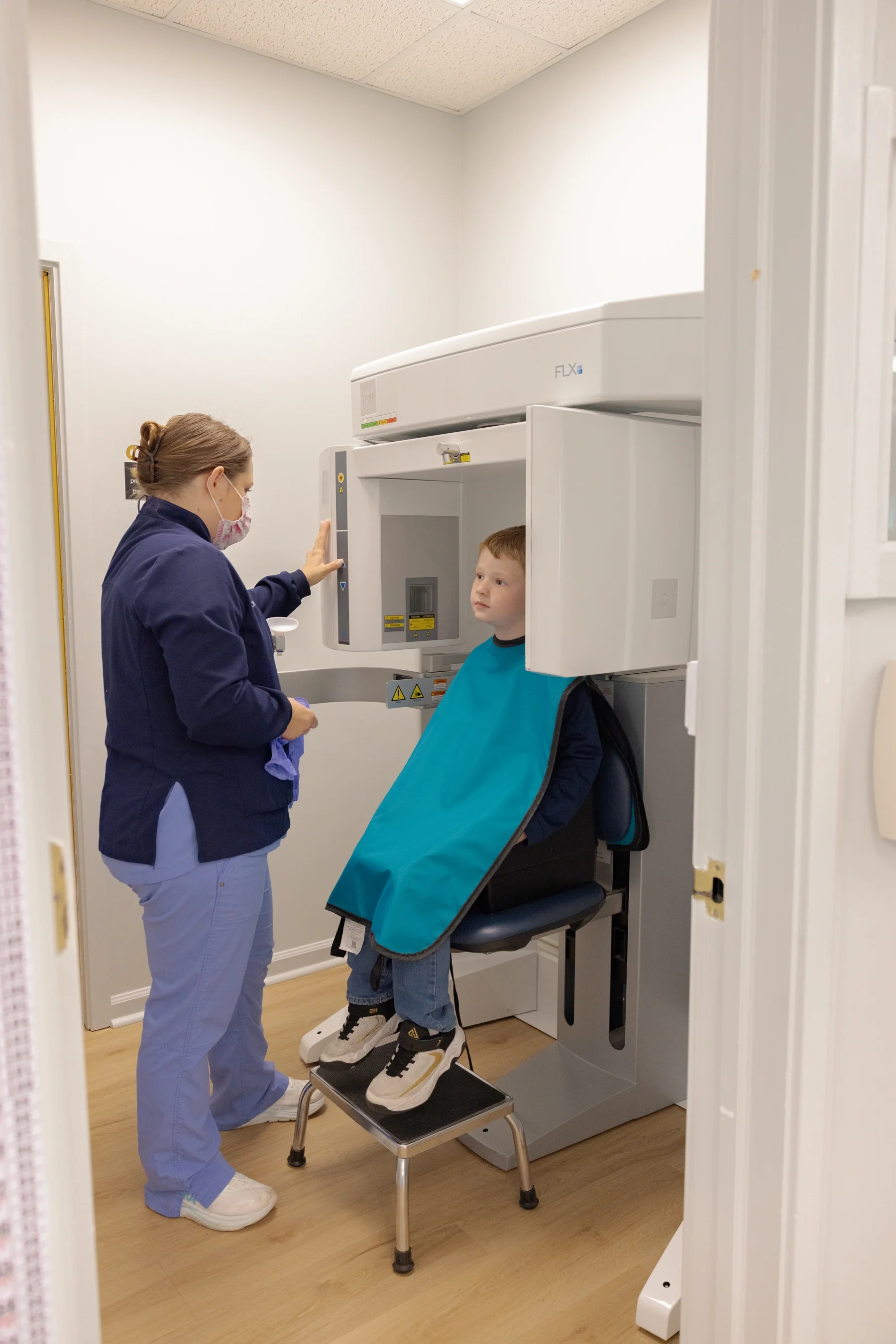
Low-Radiation CBCT 3D Imaging
When clinically appropriate, CBCT imaging allows us to evaluate your child's jaw development, skeletal structures, and airway anatomy in greater detail. This information can help guide decisions about early interceptive orthodontic treatment when needed.

Personal Exam with Dr. Bullwinkel
Dr. Bullwinkel personally reviews your child's records and conducts the clinical examination. She explains her findings in clear, straightforward language so both you and your child understand what they mean.

Clear Plan -- Honest Answers
If early interceptive orthodontic treatment is recommended, we'll explain what we see, why treatment may be beneficial, and what we hope to accomplish. If treatment isn't needed yet, we'll tell you that too and explain what we'll continue to monitor.

You'll leave with a clear picture and an honest plan. That's always the goal.
— Dr. Katie Bullwinkel, DMD, MS - Board-Certified Orthodontist
Give Your Child the Right Start at the Right Time
Your child doesn't need orthodontic treatment simply because they are seven. They need an evaluation that considers where they are now, how they are developing, and whether treatment can make a meaningful difference.
At Vincent & Bullwinkel Orthodontics, we provide personalized early orthodontic evaluations and treatment recommendations based on your child's individual needs.
Frequently Asked Questions
-
No. Some children need early treatment, while others benefit from observation until they are older. The recommendation depends on your child's individual development.
-
There is no single ideal age for every child. The appropriate timing depends on the orthodontic problem, dental development, and stage of growth.
-
Some treatments can cause temporary pressure, tenderness, or discomfort as your child adjusts. We explain what to expect and how to make the adjustment period easier.
-
Treatment time varies based on the problem being treated, your child's growth and development, and the recommended treatment approach. We'll provide an individualized estimate during the evaluation.
-
Possibly. Some children need comprehensive orthodontic treatment later, while others require little additional treatment. Early treatment does not guarantee that Phase 2 will be unnecessary.
-
The cost depends on the complexity of treatment, treatment approach, duration, appointments, clinically necessary records, insurance benefits, and whether additional treatment is needed later.
-
Orthodontic benefits vary by insurance plan. Our team can help you understand your available coverage and financial options.