
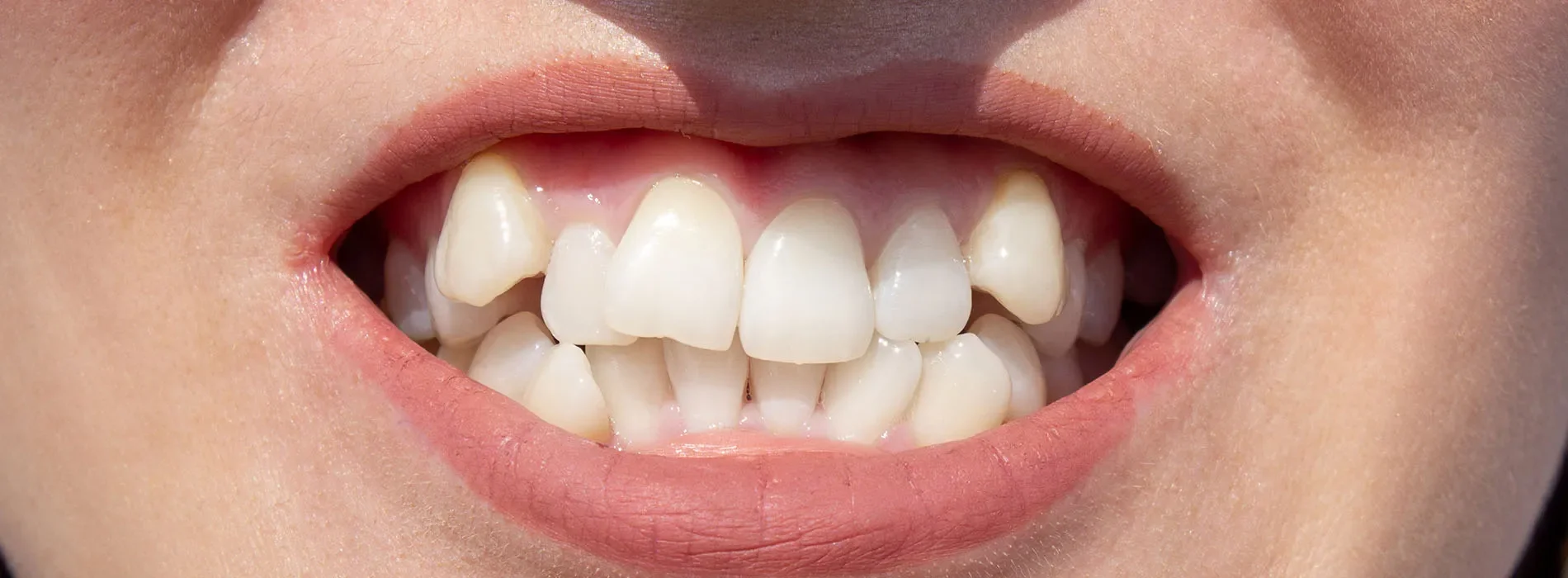
Crossbite treatment corrects a bite problem in which some upper teeth sit inside the corresponding lower teeth when the mouth closes. Recommended approaches may include braces, clear aligners, or a palatal expander, while more complex cases may require jaw surgery.
Crossbites affect children and adults and may contribute to uneven tooth wear, chewing difficulties, or jaw shifting. Understanding the type of crossbite helps an orthodontist recommend the right treatment.
At Vincent & Bullwinkel Orthodontics in Charleston, SC, an orthodontic evaluation can help determine whether you need treatment and which options best suit your needs.
What Is a Crossbite?
A crossbite is a type of malocclusion in which the upper and lower teeth do not align properly. It can affect individual teeth or an entire section of the dental arch.
In a typical bite, the upper teeth sit slightly outside the lower teeth. With a crossbite, some upper teeth sit too far inward. This misalignment may involve the front teeth, back teeth, or both.
Common signs include teeth that meet incorrectly, uneven tooth wear, difficulty chewing, or a lower jaw that shifts when biting. A crossbite differs from an underbite, although the conditions can overlap.
What Causes a Crossbite?
Crossbites can develop because of differences in jaw growth, tooth position, or childhood oral habits.
Common causes include:
Inherited jaw structure: A narrow upper jaw or jaw differences can affect how teeth meet.
Uneven jaw growth: The upper and lower jaws may develop at different rates or widths.
Dental misalignment: Individual teeth may erupt in positions that create a crossbite
Childhood habits: Prolonged thumb-sucking or certain tongue positions may contribute to bite changes.
Unusual tooth eruption: Emerging permanent teeth may affect how the bite develops.
Some crossbites are dental, while others involve the underlying jawbone. A skeletal crossbite may require a different treatment approach from one caused by tooth position alone.
What Are the Different Types of Crossbites?
Orthodontists classify crossbites according to the affected teeth and the location of the misalignment.
Anterior Crossbite
An anterior crossbite develops when the upper front teeth fall inward behind their lower counterparts. An orthodontist may recommend braces, clear aligners, or specialized appliances to improve alignment based on the underlying cause.
Posterior Crossbite
A posterior crossbite occurs when some upper back teeth sit inside the lower back teeth. A narrow upper jaw may be a possible cause, and a palatal expander may help widen the upper jaw in growing children.
Unilateral and Bilateral Crossbites
A unilateral crossbite affects one side of the mouth, while a bilateral crossbite affects both sides. Some people with a unilateral crossbite shift their lower jaw sideways to bring their teeth together.
An orthodontist can assess whether this shift results from tooth interference, jaw structure, or another bite problem.
What Are the Best Crossbite Treatment Options?
The best treatment depends on the patient's age, jaw development, tooth positions, and crossbite severity. Some patients need one appliance, while others require a combination of treatments.
Palatal Expanders for Jaw Development
A palatal expander applies gentle pressure to widen the upper jaw over time. Dentists often recommend them for children whose narrow upper jaw causes the back teeth to fit incorrectly.
Braces or aligners may follow expansion to refine tooth alignment. However, expanders are not suitable for every crossbite.
Braces for Crossbite Correction
Metal or ceramic braces use brackets and connecting wires to guide teeth into proper alignment. They can treat a range of crossbites, including more complex bite misalignments.
Vincent & Bullwinkel Orthodontics offers braces for patients in Charleston. The orthodontist can determine whether braces alone are suitable or additional appliances are needed.
Clear Aligners for Suitable Cases
Clear aligners are personalized trays that gradually shift teeth into the desired positions. You can remove them during meals and for daily brushing and flossing.
Aligners can correct some mild to moderate crossbites, but complex skeletal problems may require another approach. In suitable cases, patients can explore Spark clear aligners at Vincent & Bullwinkel Orthodontics to help correct tooth misalignment related to crossbite.
Surgical Orthodontics for Severe Skeletal Crossbites
Severe skeletal crossbites may require orthodontic treatment combined with jaw surgery, also called orthognathic surgery. Consider this option when tooth movement alone cannot adequately correct the underlying jaw discrepancy.
An orthodontist and oral surgeon coordinate care when surgery is appropriate. Most crossbites do not require surgical correction.
How to Fix a Crossbite: What Happens During Treatment?
Crossbite correction begins with an examination and a personalized treatment plan. The process generally includes these steps.
Step 1: Schedule an Orthodontic Evaluation
The orthodontist examines your teeth, gums, bite, and jaw alignment. They may use digital scans, photographs, or X-rays as needed to assess the problem.
Step 2: Understand Your Personalized Treatment Plan
Your orthodontist explains the recommended appliances, treatment stages, and estimated timeline. Children may need a plan that considers jaw growth and permanent tooth development.
Step 3: Begin Treatment and Attend Follow-Up Visits
Braces, aligners, or an expander gradually correct the bite. Regular appointments help the orthodontist monitor progress and adjust treatment as needed.
Step 4: Maintain Your Results With Retainers
After active treatment, retainers help keep teeth in their corrected positions. Follow your orthodontist's instructions because teeth can shift over time.
How Long Does Crossbite Treatment Take?
Treatment may take several months to a few years, depending on the case. No single timeline applies to every patient.
Treatment Time for Children and Teens
Growing children may benefit from early treatment when jaw development contributes to the crossbite. Some need expansion before braces, while others require monitoring until more permanent teeth emerge.
An orthodontic evaluation can help determine whether a child may benefit from early interceptive treatment or whether monitoring is more appropriate.
Treatment Time for Adults
Adults can receive crossbite treatment even after jaw growth is complete. Braces or clear aligners may correct dental misalignment, while a narrow upper jaw may benefit from maxillary skeletal expansion.
Vincent & Bullwinkel Orthodontics offers maxillary skeletal expansion using approaches such as MSE and MARPE. These techniques can widen the upper jaw without surgery in suitable patients. However, individual anatomy and clinical findings determine whether nonsurgical expansion is appropriate.
Factors That Can Affect Treatment Time
Treatment duration depends on the crossbite's severity, the patient's age, the appliances used, and whether jaw surgery is needed. Consistent aligner wear and attendance at follow-up visits also affect progress.
How Much Does Crossbite Treatment Cost?
The cost of crossbite treatment depends on the case's complexity, the appliances required, and the treatment duration. There is no single price for every patient in Charleston.
Before starting treatment, ask about the total fee, included appointments, retainer costs, insurance benefits, and available payment plans. Vincent & Bullwinkel Orthodontics offers complimentary consultations and in-house financing options. A consultation can help clarify your treatment needs and potential costs.
What Happens If a Crossbite Is Left Untreated?
Some crossbites remain stable, while others can affect tooth wear, chewing, or jaw function. An orthodontic evaluation can help determine whether correction is advisable.
Uneven Tooth Wear
When teeth meet incorrectly, some may experience greater pressure than others. Over time, this can contribute to uneven enamel wear or tooth damage.
Chewing Difficulties and Jaw Shifting
A misaligned bite may make chewing uncomfortable or cause the lower jaw to shift when the teeth meet. Jaw discomfort can have many causes, so it should not automatically be attributed to a crossbite.
Why Early Evaluation Can Matter for Children
A crossbite may affect how a child's teeth and jaws meet as development continues. Early assessment can identify problems that may benefit from treatment during growth.
Children should have their first orthodontic assessment around age seven, according to the American Association of Orthodontists. While some bite problems may need early correction, others can be observed over time as the child's teeth and jaws develop.
Crossbite Treatment in Charleston, SC: Why Choose Vincent & Bullwinkel Orthodontics?
Vincent & Bullwinkel Orthodontics serves children, teens, and adults in Charleston, SC, with orthodontic care tailored to individual needs. Treatment options include braces, Spark clear aligners, and early interceptive treatment for children when appropriate.
A consultation can help identify the cause of your crossbite, explain suitable treatment options, and set a realistic timeline.
Ready to address a crossbite? Explore braces treatment options at Vincent & Bullwinkel Orthodontics, or schedule a consultation to discuss your needs and get a personalized treatment plan.
Frequently Asked Questions
-
Yes, treatment can improve bite alignment, reduce uneven tooth wear, and support comfortable chewing. Whether you need correction depends on the severity and effects of the crossbite.
-
Not necessarily. Both adults and teenagers may need 12 to 24 months or longer, depending on their orthodontic needs.
-
Treatment can take several months to a few years. The timeline depends on severity, the appliance used, and whether you need jaw expansion or surgery.
-
An untreated crossbite may contribute to uneven tooth wear, chewing difficulties, or jaw shifting. An orthodontist can assess the risks for your specific bite.
-
The time needed to correct a crossbite varies with its cause and complexity. Braces or clear aligners may correct tooth alignment issues, while a narrow upper jaw may need an expander for proper correction.